.webp)

The Season of Gratitude — and Leftovers
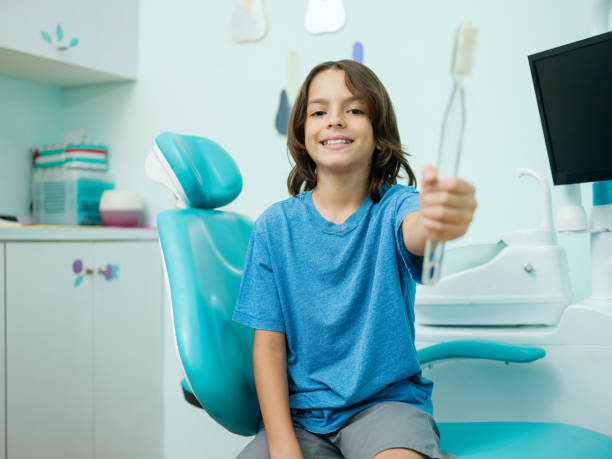
It was the week after Thanksgiving when eight-year-old Lucas arrived at the office, still beaming from his family’s big dinner. He told Dr. Tyler Driggers, his pediatric dentist at CrossRoads Pediatric Dentistry in Dallas, GA, that he’d eaten “way too much turkey and maybe a tiny bit too much pie.” His grin was proud and unrepentant.
His mom laughed and added, “He’s been sneaking pumpkin pie for breakfast all weekend. Should I be worried?”
Dr. Driggers smiled. “Not if you brushed afterward,” he said, “but let’s take a look anyway.”
That moment—warm, honest, and familiar—is what the holiday season is all about. Thanksgiving brings family, comfort food, and sweet traditions, but it also brings plenty of opportunities for sugar, starch, and skipped brushing sessions. It’s easy to forget oral health when the table is full and everyone’s laughing.
And that’s okay. Because just like gratitude, good dental habits are something we can return to—and teach in ways that stick long after the leftovers are gone.
When Sweet Traditions Meet Tiny Teeth
Dr. Driggers often says the holidays are a time when “childhood joy and cavity risk collide.” Between cranberry sauce, pies, and sticky rolls, kids consume far more sugar than usual—and often over several days.
The problem isn’t just the sugar; it’s the frequency. Each time your child eats a sugary food, acid attacks their enamel for up to 20 minutes. When those exposures happen repeatedly throughout the day (and night—thanks to post-dinner snacking), teeth never get a break to recover.
It’s what dentists call a “sugar cycle.” But to parents, it just feels like normal holiday life.
Still, these small indulgences don’t have to lead to dental trouble. The secret lies in what happens after the feast—how kids clean up, hydrate, and snack in the days that follow.

Lucas’ Lesson in Gratitude
During his exam, Dr. Driggers found a small area of early enamel wear on Lucas’ back molar—nothing serious, just a sign of a holiday season well-enjoyed. Rather than framing it as a problem, he turned it into a learning moment.
“Your teeth did a lot of work this week,” he told Lucas. “Now they deserve a little thank-you.”
That phrase caught Lucas’ attention. “Thank my teeth?” he asked, amused.
“Sure,” Dr. Driggers replied. “They helped you chew all that turkey, right? Brushing and flossing are how you say thanks.”
Michelle, his mom, laughed—but later said it changed how Lucas saw dental care. “He brushed extra carefully that night,” she said, “and told me he was ‘thanking his molars.’”
That small shift—from routine to gratitude—made brushing feel like something positive, not a chore.
The Thanksgiving Table and Your Child’s Smile

Let’s be honest: no one’s skipping dessert at Thanksgiving. Nor should they. Food is a way we connect, and traditions matter just as much as nutrition. The key is learning how to navigate the table wisely.
Here’s what Dr. Driggers often tells families in Dallas, GA during the holidays:
- The “Meal Time Rule.” Let sweets come with meals—not between them. When kids eat candy or pie with dinner, saliva flow is higher, which helps neutralize acids and wash away food debris faster.
- Water Is the Hero of Every Feast. After every plate (especially sticky foods like cranberry sauce or stuffing), give your child water to rinse their mouth. It’s simple, but it makes a big difference.
- Cheese Beats Chocolate (Sometimes). Cheese helps balance the mouth’s pH and strengthens enamel naturally. A small cube of cheese or milk after dessert can help protect teeth without feeling like “dentist homework.”
- Watch the “Snack Stretch.” Thanksgiving leftovers are irresistible—but avoid grazing all day. Turn snacks into set meals, and encourage brushing afterward if sweets are involved.
The Science of Gratitude—For Teeth and Beyond
Interestingly, gratitude itself can improve oral health behaviors. Studies show that when kids associate brushing or flossing with something positive—like gratitude, responsibility, or care—they’re more likely to stick with it.
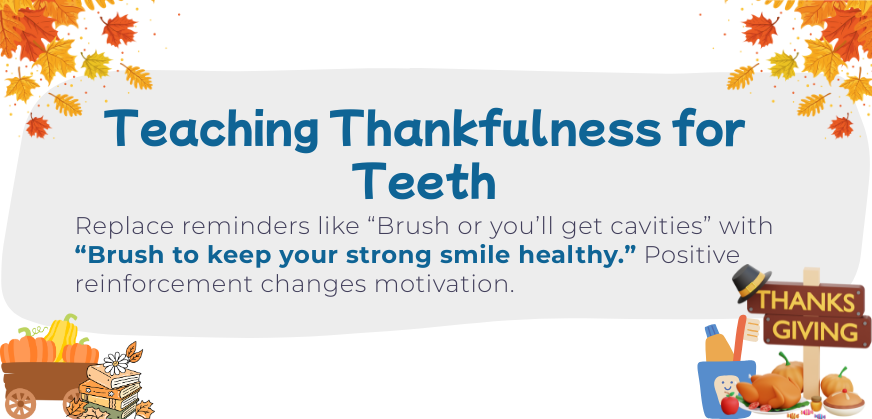
At CrossRoads Pediatric Dentistry, Dr. Driggers’ team often uses gratitude-based language to make dental habits “click” for children. Instead of saying “don’t forget to brush,” they say “let’s thank your teeth for helping you eat.” It’s simple but powerful.
Because when kids learn that dental care is about appreciation, not punishment, they take pride in it. And pride leads to consistency.
A Parent’s Hidden Worry: Sugar, Crowns, and the “What If”
Michelle admitted later that she had another concern—what if Lucas needed a filling? “I’ve always worried he’d get scared,” she said. “He’s sensitive, and I didn’t want him to hate the dentist.”
Dr. Driggers understands that fear well. “Parents often feel more anxious than their kids,” he says. “They imagine the worst, but modern pediatric dentistry is designed for comfort. We use tooth-colored fillings, gentle numbing techniques, and explain everything in child-friendly language.”
If a cavity does appear after the holidays, it’s not a catastrophe—it’s a small correction, not a failure.

.png)